what is In Vitro Fertilization (IVF) ?
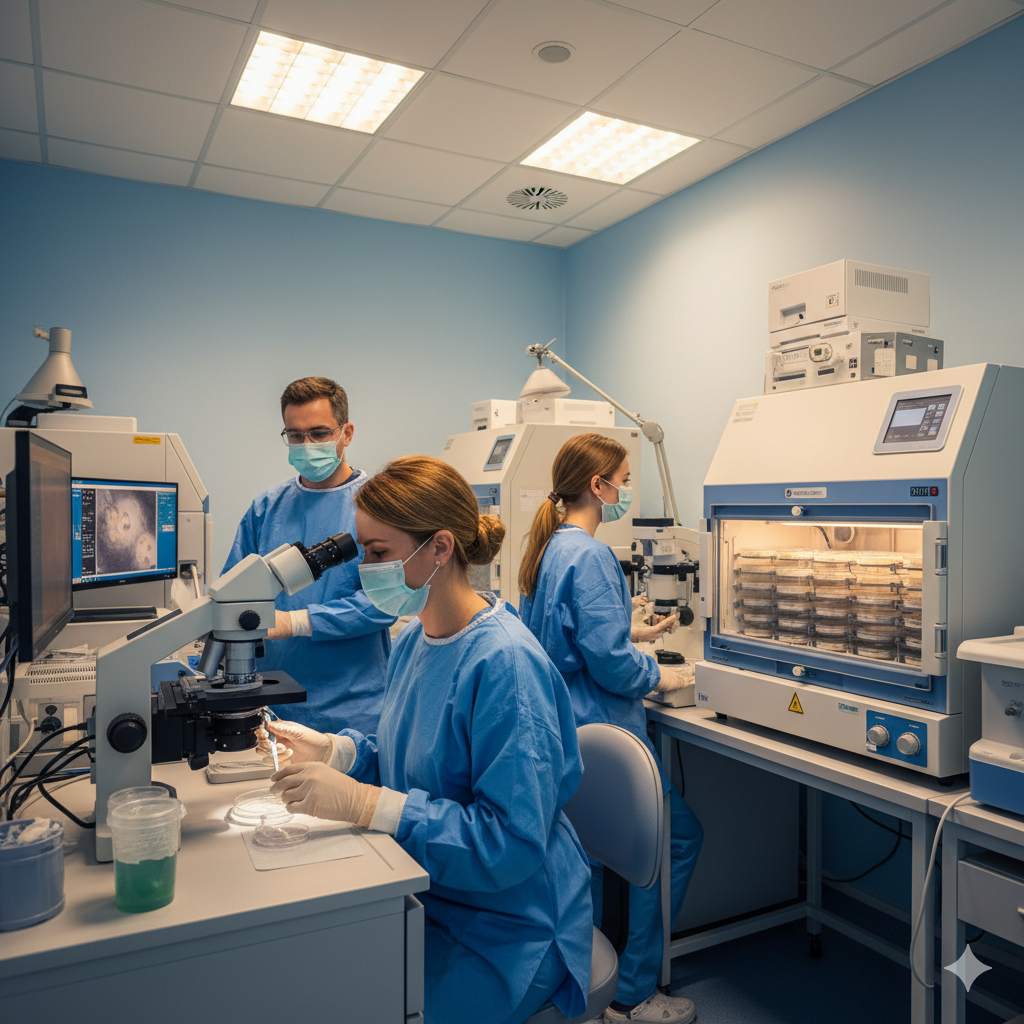
In Vitro Fertilization (IVF) is a widely used assisted reproductive technology designed to help individuals and couples struggling with infertility. The process involves retrieving mature eggs from a woman’s ovaries and fertilizing them with sperm in a controlled laboratory environment. Once fertilization occurs, the resulting embryos are carefully monitored for growth and quality before being transferred into the woman’s uterus, where implantation can occur and a pregnancy may develop. IVF is recommended for a variety of infertility issues, including blocked or damaged fallopian tubes, male factor infertility, ovulation disorders, unexplained infertility, or genetic concerns. The procedure is highly personalized and often involves hormonal treatments to stimulate egg production, precise timing for egg retrieval, and careful embryo selection to increase the chances of success
Who Can Benefit from IVF:
IVF is recommended for individuals or couples with conditions such as:Blocked or damaged fallopian tubesMale infertility issues (low sperm count, poor motility)Ovulation disorders or hormonal imbalancesEndometriosis or unexplained infertilityCouples using donor eggs, sperm, or gestational surrogacy
Benefits of IVF:
High success rates: Especially with modern techniques like embryo freezing and genetic testing.Family planning flexibility: Enables the use of donor eggs, sperm, or surrogates.Overcomes multiple infertility causes: Both male and female infertility can be addressed.Genetic screening options: Allows detection of inherited genetic disorders before implantation.Ability to preserve fertility: Eggs or embryos can be frozen for future use.