
November 14, 2025
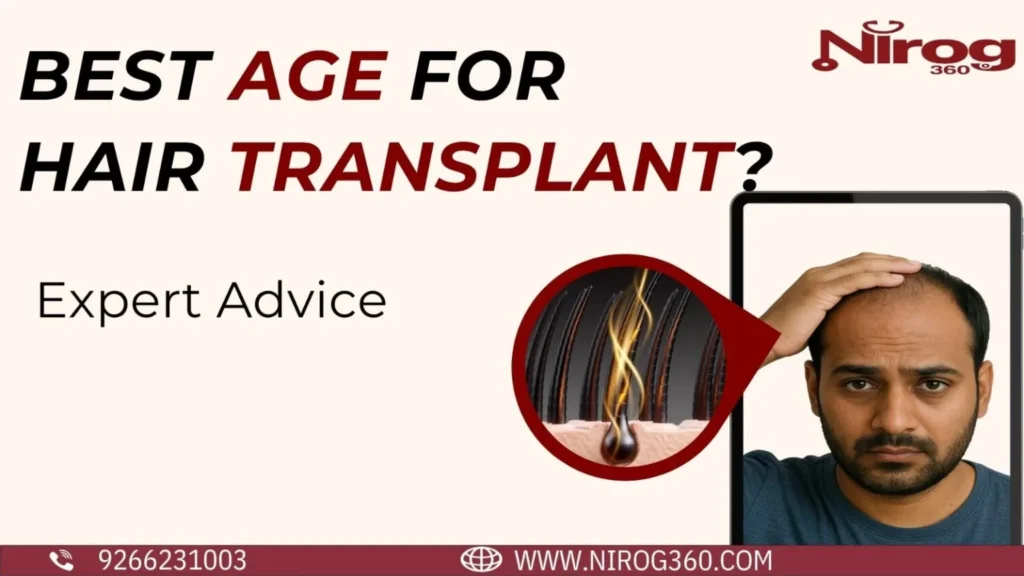
Overview
Understanding Hair Transplant
A hair transplant is a surgical procedure that includes shifting hair follicles from one part of the body, generally the reverse or sides of the crown, to bald or thinning areas. The two most popular ways are
FUT (Follicular Unit Transplantation) A strip of crown is removed and divided into grafts.
FUE (Follicular Unit Extraction)
It involves the direct birth of individual hair follicles from the patron point and their implantation into the philanthropist point.
Both ways give veritably natural and long-lasting results if performed by an educated surgeon. Still, the success of a transplant and how long it would last is very much dependent upon choosing the Bestt age and stage of hair loss.
Is there a perfect age for hair transplants?
There’s no fixed or universal age for getting a hair transplant, according to hair restoration experts. The ideal age can vary due to so numerous factors, which include the cause of hair loss, the extent of balding, and one’s overall health.
Still, the majority of experts agree that the Best age for a hair transplant is between 25 and 45. That’s why
By age 25, the pattern and stability of hair loss generally become more predictable.
There’s generally good patron hair viscosity in this age group, which is necessary for the Best issues to be achieved.
The crown still retains a high mending capacity, therefore guaranteeing brisk recovery
That said, let’s consider how hair transplant opinions differ based on age group.
Hair Transplant in Early 20s—Why It’s Not Always Recommended
Numerous people start developing thinning of hair from as early as 18–22 years onward. Still, while tempting, one shouldn’t rush to have a hair transplant incontinently, and most surgeons advise against that.
Reasons
- Unstable Pattern of Hair Loss
Hair loss in youngish cases is generally progressive. However, the girding native hair may continue to fall out and affect the appearance irregularly later on if you suffer a transplant beforehand too.
- Limited Donor Hair
Donor hair is a limited resource. Using it precociously can reduce the grafts available for use in posterior sessions.
- Cerebral Pressure
Youthful individuals may anticipate immediate or lifelong results, which is unrealistic if the hair loss is not stabilized.
Expert Advice
It’s generally recommended that croakers
advise beginning with non-surgical treatments, such as minoxidil, finasteride, PRP remedy, and life variations, which reduce hair loss before a transplant.
The appearance of his home pained him because he has always maintained it himself.
Hair Transplant Between 25 and 35 Times—The Ideal Time
Most surgeons agree that this range provides the ideal conditions for performing a hair transplant.
Why This Age Is Ideal
The hair loss pattern has stabilized, therefore enabling croakers
to plan better.
Patron hair viscosity is strong.
The pliantness and mending capacity of the crown is excellent.
Results tend to look more natural and last longer.
Cases at this stage are emotionally and financially set for the procedure and accept that maintaining results may bear ongoing care.
Expert Advice
Still, you need to consult a good stylist or hair transplant surgeon if you’re in your late 20s or early 30s with significant thinning. This professional will be suitable to guide you on your felicity and design your treatment plan according to the pattern of baldness.
Hair Transplant After 40—Still a Good Option
Can You Be "Too Old" for a Hair Transplant?
While there’s no upper age limit, utmost experts recommend that cases above 60 should undergo an expansive medical checkup previous to surgery. However, successful transplantation is still possible if the patron area has sufficient hair and you’re in good health.
crucial Factors That Matter More Than Age
Donor hair quality
Crown condition
General health and specifics
Realistic prospects
Non-Surgical Alternatives Before a Hair Transplant
Quacks may recommend non-surgical hair restoration approaches before considering surgery, particularly if one’s hair loss is at an early stage. They include the following:
Minoxidil (Rogaine) helps to stimulate hair follicles and slow hair loss.
. Finasteride (Propecia) lowers the levels of DHT, a hormone responsible for pattern baldness.
. Platelet-Rich Tube (PRP) remedy This treatment uses your blood tube to stimulate hair growth.
. Low-level laser therapy (LLLT) stimulates blood inflow and thickens the being’s hair.
These ways can occasionally avoid or indeed delay the need for surgical intervention in youthful cases.
Expert Advice on Choosing the Right Time
Here’s what hair transplant experts recommend before scheduling surgery:
- Wait for Hair Loss Stabilization:
Avoid surgery until your hair loss pattern stops progressing. - Get a Professional Evaluation:
A trichologist or certified hair transplant surgeon will assess your scalp, donor density, and medical history. - Consider Long-Term Planning:
A good surgeon will create a future-proof plan, ensuring that as you age, your hairline remains natural. - Maintain a Healthy Lifestyle:
Balanced nutrition, stress management, and proper scalp care help improve results post-transplant.
- Wait for Hair Loss Stabilization: